
Your Ritual Nature
When I first began thinking about ritual, I saw it primarily as a cultural phenomenon, a way of preserving the traditions and customs of a society. But the more deeply I contemplated ritual, and the more I began re-integrating it into my own life, the more I realised this was a superficial understanding of something fundamental to our individual and collective flourishing.
The Animal Kingdom
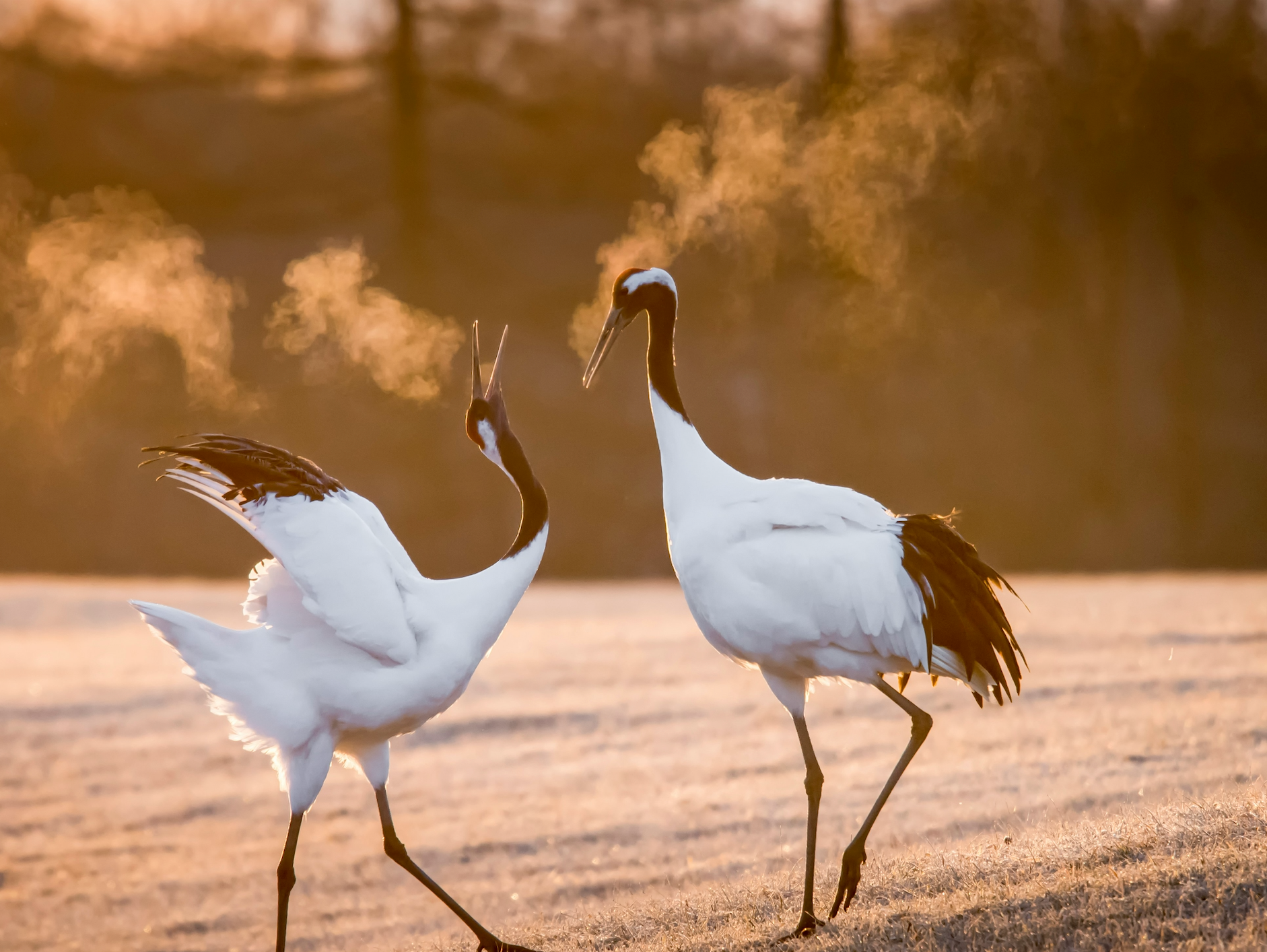
Throughout the animal kingdom we find countless examples of ritualised behaviour: the elaborate courtship dances of cranes, the intricate greeting ceremonies of wolf packs, the grooming rituals of chimpanzees, and the grieving behaviours of elephants.
What is striking is that, while these behaviours can appear elaborate or even ornate, as with the extraordinary displays of the bowerbird, there is always a pragmatism beneath the beauty. Each ritual serves a natural purpose. They strengthen social bonds, reduce conflict, mark transitions, regulate emotion, coordinate cooperation, and align the individual with the rhythms of life.
Perhaps this is where we have become confused. We often think of ritual as decorative, religious, ideological, or outmoded. But perhaps ritual is what happens when natural, embodied patterns of harmonious relationship become consciously preserved, symbolised, and transmitted across generations.
What is a ritual?
The dictionary definition of a ritual is a structured sequence of actions, words, or behaviours performed in a specific order and usually repeated over time.
I would define ritual as an intentional container through which embodied patterns of behaviour enable us to enter more safely and harmoniously into relationship.
These patterns are not arbitrary. They are refined through the wisdom of the past, transmissible in the present.
The ritual container
Across cultures and throughout history, humans have repeatedly developed rituals around certain plants, particularly those capable of profoundly affecting consciousness, healing, or community. The ritual creates a clear and intentional boundary that prevents the misuse of these substances. It also creates the necessary conditions to enter into healthy communion with the other - be that plant, person, community, nature or the transcendent.
It creates the rules and the structure that allows for the spontaneity, and potency of the experience to be held.
Maybe it is the case that rituals did not evolve to preserve ideologies, but to preserve relationships. Perhaps dogma is what emerges when the ideas are prioritised over the very relationships they were born to maintain.
Ritual in the modern world
I would suggest that on a societal level, in the western world, we are moving at such a pace that we have disconnected from the heart of ritual. And with it, the reverence, presence and conscious participation in life that deeply nourishes us. But, echoes remain in our habits, our morning coffee, our bedtime routine, offering gratitude before a family meal.
My personal rituals
My favourite plant ally is cacao, and I enjoy it almost daily. I have a ritual in the process of making it, and I always set an intention and share a few words of invocation. I enter into a state of presence and gratitude and find it to be a heart-opening, grounding, and inspiring plant to work with.
Occasionally I will sit with my partner and we will enter into a tea ceremony. Whoever is serving will ritualistically prepare the tea, the water, the bowls, and serve several cups, observed in peaceful silence. This helps us harmonise with one another, reconnect with ourselves, and return to our centre before the demands of parenting and running a business begin.
A number of times a year I will participate in more communal rituals and ceremonies with the intention of deepening my relationship with myself, my community, natural intelligence and my personal spiritual foundations.
In summary
It strikes me that the quality of our lives is deeply impacted by the quality of our relationships. The more intentionally, consciously and wisely we can participate in the things we enter into relationship with the more coherent we will become within them.
Perhaps, on our journey back to our true nature, we will rediscover more of the healthy rituals that support us to flourish.
Here’s to the process of coming home to our ritual nature.
Until next time,
Peace and love,
Alex


2 comments
Hey Shane, thank you so much for your thoughtful and insightful comment. It’s awesome to hear about your intention and conscious relating to plants. I am not an AI, part of me was flattered you thought I might be, the other part offended Lol. I would love to share some pointers regards working with Cacao. Firstly, getting a good source of Ceremonial grade Cocoa paste is what I would recommend. Great Spirit sell a wonderful Peruvian one, which is what I use but there are other really good ones around. In terms of preparation, a strong ceremonial dose would be about 30-40g. Depending if you want to try with a more moderate dose first you could do 20g. I like to prepare with either a cup of spring water, heated up in a saucepan, with honey, salt and a little cayenne pepper. Or you can use milk or non dairy milk. When preparing I bring a lot of presence to the process, and start to feel into my intention for working with the plant. If I am having a more moderate dose it may be to support my creativity or writing. A stronger ceremonial dose, I may be for more inner work, meditation, It’s a very heart opening plant so can be very supportive to meet the inner landscape. I would usually then have a space set up where I can sit quietly and comfortably, sometimes with some gentle music, sometimes silence. Light an incense, sometimes I write my intention into my journal. Sit and slowly sup the cocoa, paying attention to its taste and texture. How it feels in my body and its effects. It’s gentle yet pronounced for me. Like any plant everyone meets t differently. It can be used for social gatherings and communing and connection. For creativity, or for deeper inner work. I find it to be a feminine, earthy spirit. I hope you enjoy your journey with it and please let me know how you get on. All the best, Alex
Alex
Alex, you experienced and expressed the very essence of Ritual. Well done putting it into legible words.
A gift, you have.
(I hope i’m not complimenting AI)
Ritual is, as you so eloquently put it, a natural expression. One doesn’t need to “learn” rituals or even copy our ancestors. One needs to only follow ones inner inclinations. Like dance. One doesn’t consciously dance the moves, one just follows the inner rhythm.
But, in our world, I agree with your sentiment, if we’re not doing it naturally then we do need to bring it back into our lives consciously, by recognising the benefits and purposes.
I have a ritualistic relationship with the Cannibas plant. She has her mission of calming the mind and body of man, to enable a re-connection with our Self. She has taught me several unique ways of partaking of her essence, each one giving me a different level of relationship with her and the rest of creation.I’m interested in the Cacao plant and would appreciate any pointers on how to approach and consume her.
Many thanks for your thoughts.
Shane
Leave a comment
This site is protected by hCaptcha and the hCaptcha Privacy Policy and Terms of Service apply.