
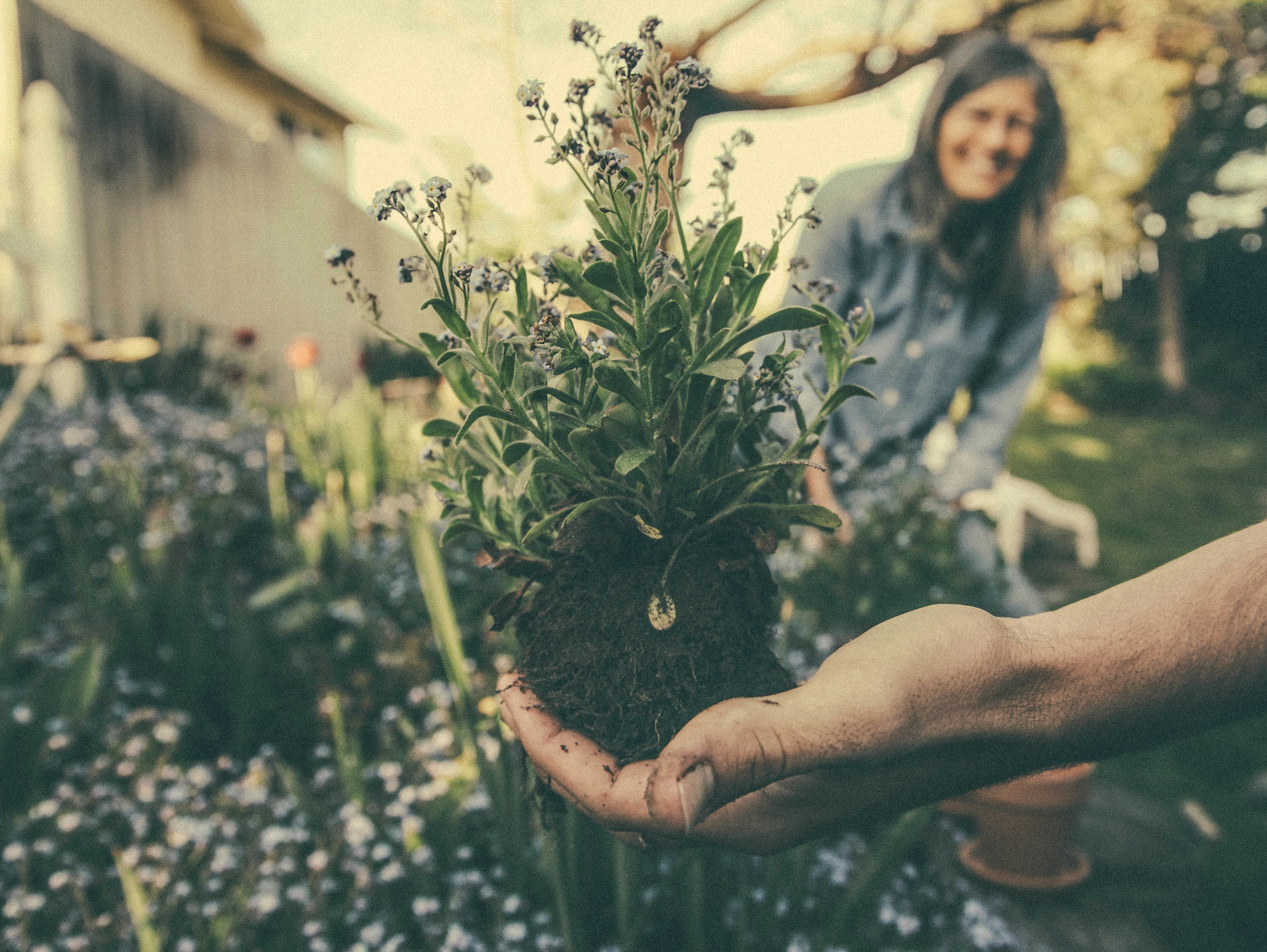
The Future has a Place for Us
This is the third part of my series on the Naturally Intelligent Future.
In my last post I spoke about the rise of the Authentic Artisan.
Today, I would like to look at communities.
Put a single human in the jungle, they become a meal, put thirty together, they become a civilisation.
We’ve never survived alone.
Today, we have never been more digitally connected and physically disconnected.
This disconnection from one another reflects a disconnection from ourselves. Before I embarked on a journey of reconnecting with my natural intelligence, I lived predominantly in a conceptual landscape. Which is to say, I was almost entirely in thought. I had little awareness of my body: my suppressed emotions, my numbed senses, my shallow breath, my tight rib cage, my gripped pelvis, my frozen diaphragm.
I couldn't be present with my life because I wasn't present with my body, and therefore I wasn't truly present with others. While they spoke, I was often thinking about my response, or drifting off on flights of fancy, smiling and nodding as though I were listening.
By my early twenties, I was living in a flat in West London. I was surrounded by four million people, yet more often than not, I felt profoundly alone. I lived in a block of about twelve people, and I only knew the name of one of them.
It wasn't until I moved away that I realised just how constantly activated my nervous system had been. I was living in a state of hypervigilance, never feeling fully safe, which is understandable for a lone creature, out of its natural habitat, in a loud and crowded urban jungle.
So I played a lot of video games, scrolled a lot of Instagram, smoked a lot of cannabis, and did a lot of shopping.
Fast forward to today. I am writing from a little coastal village in the Northern Rivers of Australia. After the birth of my first child, and as I became more acquainted with my natural intelligence, I realised the importance of community. My partner and I sought out somewhere that still valued intimate human connection.
We moved to a little place called Mullumbimby. It's what I would call a barefoot community. Almost immediately we could feel it. The thriving farmers' market, where customers greet the vendors with warm hugs. People stopping in the street simply to connect. Local musicians filling the air with live music.
The first thing I noticed was this: not only did people know each other here, they genuinely cared for one another.
And then catastrophe struck.
In February 2022, I was in my home in Mullumbimby when the heavens opened. It was as though an ocean had fallen from the sky.
Relentless rain battered the region and simply would not stop. Before long, the rivers burst their banks, roads disappeared beneath floodwater, and the community was thrust into extreme peril. Homes filled rapidly, water levels continued to rise, and people found themselves stranded, cut off from one another with little means of communication, no power, and no running water.
Two days into the disaster, there was still almost no official emergency response in the area.
Then, as the town sank, the community rose.
Before long, an extraordinary civilian response emerged.
At the civic centre, people transformed the town hall into the heart of a remarkable operation. Large whiteboards outlined rescue missions for swathes of volunteers. Tents became donation centres for food, nappies, water, blankets and medical supplies. Others offered counselling for those needing psychological support.
Every boat and four-wheel drive in the area was filled with volunteers carrying ropes and chainsaws, racing to pull people from mudslides, rescue families from rooftops, and deliver food and water to mothers stranded with infants.
Anyone with a dry floor offered emergency accommodation to those who had lost theirs.
I was in awe, not only of the heart of the community, but of its skill, its speed, its collaboration, its efficiency, and its instinctive ability to act.
This was not a community waiting to be rescued, if it had been, it would not have been.
This was a community connected enough to themselves, to each other, and to the land, to survive a catastrophe.
The community pulled itself through the floods. Then came the devastation that remained.
Street after street of homes stood emptied, every possession dragged out onto the kerbside, caked in mud. Yet again, no-one faced it alone. Friends, neighbours and strangers worked tirelessly side by side.
The flood ripped through the heart of the community, but rather than destroy it, it opened it wider.
In the years that followed, you could feel that the town had not only survived, but had become more deeply connected and empowered by what it had endured.
Having since had a second child, the importance of community continues to dawn on me more deeply.
One afternoon, my partner was quietly nursing our newborn while I was running around trying to keep the house together, my son entertained, and my business functioning. Then came a gentle knock at the front door.
I opened it to find no-one there. Just a large tray of home-cooked, nourishing food left on the doorstep.
The flood demonstrated to me, viscerally, that community is not a luxury. It is a necessary component of human flourishing.
We are communal creatures and always have been. Perhaps a great deal of our anxiety, our confusion and our longing is rooted in a sense that we are displaced, that we need to belong. We have increasingly organised the world around the individual, and in doing so become severed. We are tribal, bonded, connected creatures.
We belong together.
We are currently, collectively and individually, suffering from the absence of healthy, functional community. But our suffering is not in vain. Through feeling its absence, we are remembering its value.
As we come home to ourselves, we will come home to one another.
Until the next time,
With peace and love,
Alex

2 comments
This is such a beautiful reminder that we are made for connection and that we truly thrive in community.
I’m also so excited to see these reflections now have a permanent home on your website. These pieces are far too valuable to disappear into an inbox, they deserve to be revisited, shared and reflected on time and time again.
Thank you for continuing to put words to something so many of us feel but struggle to express.
Cara
Thank you Alex for sharing your life experiences
So much warmth and truth. I agree so much with the importance of man/woman needing community connection. I was just visiting the Sunshine Coast and loved the community there I felt like I could breath and felt like I was home Amongst a community of people that love life. I was in Eumandi.
Love your stories and look forward to reading the next one.
Kelly 🙋♀️
Kelly
Leave a comment
This site is protected by hCaptcha and the hCaptcha Privacy Policy and Terms of Service apply.